Before, I thought that “getting a Korean makeup application” was something only internet celebrities would do.
Until one day, I met a Korean girl in a café who had an absolutely stunning presence. Her makeup wasn’t heavy, but her skin looked radiant, and the angle of her eyes was just right, giving her a soft yet energetic look. I couldn’t help but stare at her and wonder: Is this just how she’s naturally born, or is it skill?
Later, while living in Seoul for three months, I got my makeup applied three times before truly realizing how different Korean makeup is from what I had imagined. In this article, I want to share my experiences as they were—without any filters or embellishments, even including the less successful attempts.
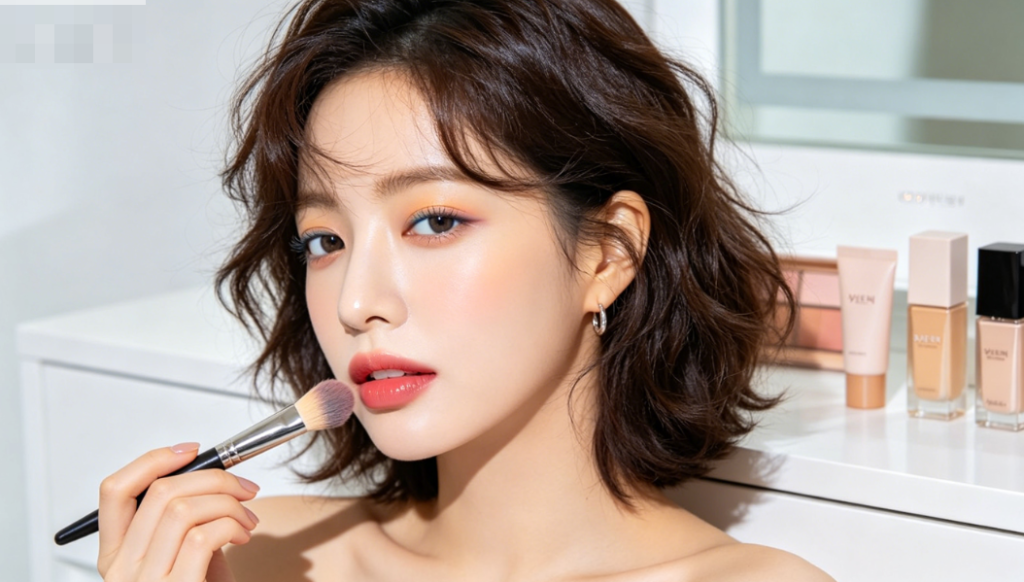
Korean makeup is not what I expected it to be.
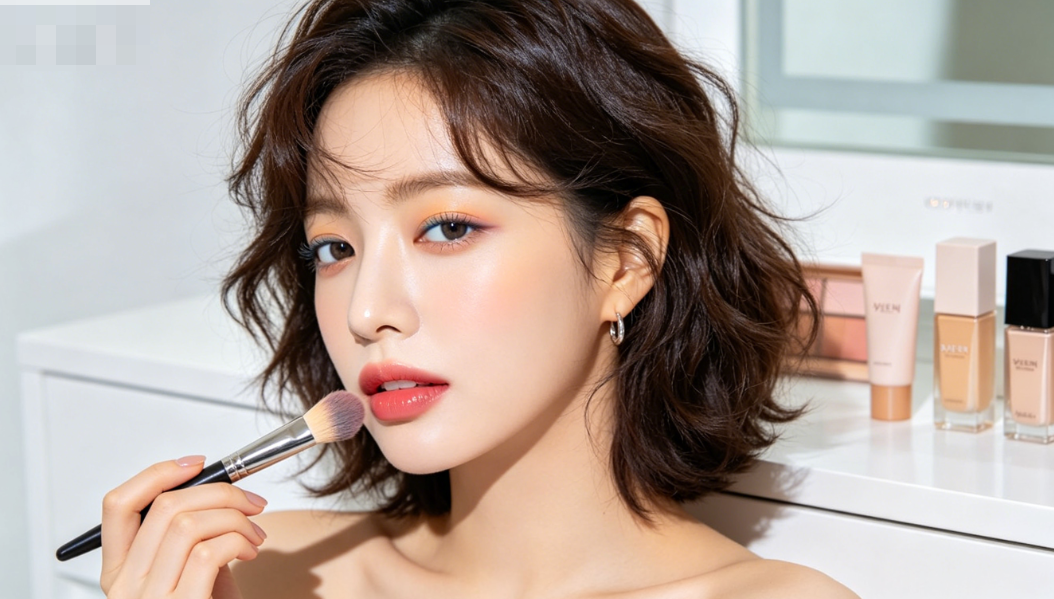
Before going there, I thought Korean makeup meant “bold Korean-style eye makeup + lip biting + a completely fair complexion,” something similar to the style everyone uses for photos.
But when I actually sat in front of the makeup artist, the first question she asked wasn’t “What style do you want?” It was:
“What are you going to do after getting your makeup done today? Go shopping, take pictures, or eat out?”
I said I was going shopping, and she stepped back and said, “Then keep it light; you don’t need to apply too much base makeup.”
This really impressed me. Korean makeup artists don’t just apply a preset template to your face; they ask about your daily activities.
Three makeup applications, three different experiences.
First attempt: The Hongda light makeup experience was a bit of a disaster.
The first time was at a medium-sized makeup studio in Hongda. It had a good rating on Naver, and when I made the reservation, I just mentioned “natural Korean-style makeup.”
The makeup artist was a young man in his twenties. His skills were fine, but he followed a rather formulaic process: applying base all over the face, then lip gloss, and finally thick, defined lashes. The problem was that my eyes are already quite large with distinct contours, so when those lashes were applied, it didn’t look Korean at all—it more closely resembled the old-fashioned Japanese-style makeup.
When I got back to the hotel, I studied my reflection for a long time and decided to dilute the makeup a bit using cotton swabs. Later, I learned that Korean makeup artists usually apply lashes one by one, but this method is more suitable for people with thinner eyes. If your eyes are already expressive enough, you don’t need that many layers of makeup.
Lesson learned: Next time, I need to clearly explain my own facial features instead of just asking for “natural” makeup.
Second attempt: I added a personal color diagnosis, and this time it worked out perfectly.
For the second time, I followed a different approach: I first got a personal color diagnosis and then used the results to schedule my makeup appointment.
I used to think personal color diagnosis was some sort of superstition, but after doing it, I realized it’s actually very useful.
The general process is like this:
- Enter the salon with no makeup on—even avoid sunscreen if possible.
- Sitting in front of a neutral-colored mirror, the expert places different colors of fabric with varying shades and temperatures under your face one by one.
- Under special lighting, you determine which color palette makes your face “shine” and which ones make it “dimmer”.
- The diagnosis usually identifies one season out of spring, summer, autumn, or winter, and then further specifies the type of color tones.
- Finally, you receive a color chart and recommendations for how to combine those colors.
My result was “spring bright tones,” which means I look good in low-saturation coral pink, apricot orange, and milk tea colors, but not in bright red, deep burgundy, or pure white.
When I took this result to the makeup artist, I said right away, “I’m in the spring bright tone category, but today I want to try a more understated look.” He immediately understood and chose foundation half-a-shade lighter than what I usually use, applied brown gradient eyeshadow, and used a low-saturation rose pink on my lips.
The result was truly “you look great today” – it didn’t feel like I had makeup on, but I definitely looked better than without any makeup at all.

Third time: at a high-end studio, I finally understood what “getting a facelift” really meant.
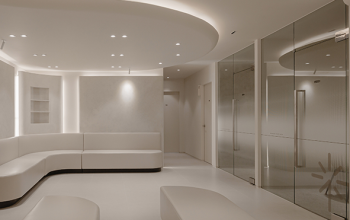
On my third visit, I went to a high-end studio in the Jiangnan region. The cost was more than twice that of the previous two times, but it was there that I truly grasped the essence of Korean makeup.
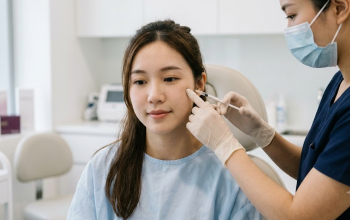
The makeup artist was a very quiet girl who hardly spoke throughout the process, but every move she made was precise. Her skincare routine before applying makeup took thirty minutes: water, lotion, essence, primer—each layer was carefully applied and pressed into the skin with the palm of her hand to ensure absorption. Sitting there, it felt more like I was receiving a skincare treatment rather than putting on makeup.
After applying the base makeup, I already wanted to look at myself in the mirror again and again: there was no trace of powder, and it was impossible to tell that any makeup had been applied, but my skin looked even, radiant, and my pores were completely invisible.
This is what Korean makeup artists refer to as “making the skin look natural” – it’s not about covering up, but about making the skin look as it本来 is.
For her eye makeup, she used only two colors, which is fewer than I use when I apply my own makeup, but the application was so precise it couldn’t have been more accurate. She said that because I have many wrinkles around my eyes, spreading the eyeshadow outward would only make them more noticeable, so just slightly darkening the corners of my eyes was enough.
I asked her later, “How did you figure that out?” She replied, “I just looked at it under the light for five seconds and knew.”
Three Real Experiences with Korean Makeup Application
Experience 1: Korean makeup artists really understand the art of “adding and subtracting” elements
When I got my makeup done in China, the artists usually added more and more elements—lashes, highlighters, brows. But many Korean makeup artists think in the opposite way: they consider what you already have and what doesn’t need to be added, then focus on just one key aspect.
This “subtractive” approach is in line with the “natural, relaxed” aesthetic in Korean fashion and beauty; the goal is not to make you look like you’ve worn makeup, but to make you look well-nourished and in good condition.
Experience 2: Pre-makeup skincare really takes time
This is something I noticed in all three of my experiences. Korean makeup artists spend much more time on pre-makeup skincare than I expected—at a minimum of fifteen minutes, and up to thirty minutes in the longest instance.
They have a saying: whether the base makeup looks good depends 60% on the preparations before applying it and 40% on the base makeup itself.
So if you book an hour for makeup application, don’t think that the first twenty minutes spent on skincare are a waste of time—they are actually the most valuable part.
Experience number three: The possibility of going wrong exists, but it can be prevented.
The main reason I made that mistake the first time was that my communication wasn’t specific enough. “Natural Korean style” is actually a very vague request, and each designer interprets it differently.
What I learned later on is to find two or three reference images before making an appointment, and clearly explain your eye shape (single eyelid, inner double eyelids, large eyes), as well as your plans for the day (photography, shopping, dinner). This way, the chances of misunderstandings are greatly reduced.
| Things you need to clarify before making an appointment | Examples of how to describe these details |
|---|---|
| Face shape and eye shape | “I have inner double eyelids and slightly deeper contours.” |
| Today’s schedule | “For outdoor photos, you need to be able to handle sweat.” |
| Reference styles | Provide 2-3 images and describe it as “this look, but a bit lighter” |
| What I don’t want | “No heavy eyelashes, no bright red lips” |
| Skin condition notes | “My T-zone gets oily easily, so don’t apply too much foundation” |
Reference costs for Korean makeup services (2026)
| Category | Price (Korean won) | Converted into RMB | Target Audience |
|---|---|---|---|
| Individual Color Diagnosis (Single Service) | ₩50,000–120,000 | Approximately 260–620 yuan | Want to find out which color palette suits you best? |
| Light Makeup Experience (Hongda/Lida Areas) | ₩80,000–150,000 | Approximately 415–780 yuan | First-time user with a limited budget |
| Full makeup look (including styling) | ₩150,000–250,000 | Approximately 780–1,300 yuan | For photos or special occasions |
| Color analysis + full makeup package | ₩200,000–350,000 | Approximately 1,040–1,820 yuan | Looking for a completely personalized experience? |
| High-end studios in Jiangnan/Qingtan-dong | ₩350,000–600,000 | Approximately 1,820–3,120 yuan | Same style as celebrities, top-tier technology |
Recommendation: For your first experience, choose a studio in the mid-range price range (₩150,000–200,000). First, figure out what you like, and then decide whether to upgrade later.

The requirements for booking a Korean makeup service are actually lower than those for a dermatology appointment. However, if you don’t speak Korean, sending messages on Instagram or Naver can be a lengthy process. For my second and third bookings, I used BeautsGO, which saved me a lot of time waiting for responses.
BeautsGO is a specialized reservation platform for Chinese travelers going to Korea. There are three ways to use it:
Method 1: BeautsGO official website
- Search for “BeautsGO” in your browser or visit the official website directly.
- Click on the “Makeup/Styling” category to filter results by location (Gangnam/Hongdae/Myeongdong) or style.
- Go to the page of the studio that interests you and read the Chinese descriptions, prices, and reviews.
- When selecting a date and time slot, please fill in your personal information and details of your requirements.
- After submitting, wait for the confirmation notification (usually 1–2 business days).
Method Two: BeautsGO WeChat Mini Program
- Search for the “BeautsGO” mini program on WeChat and open it.
- Click on “Korean Services” → “Beauty Styling”.
- Sort the studios by region or popularity.
- Click “Book Now” and select the desired date and service.
- Enter any notes (e.g., skin tone, eye shape, desired style) and submit.
Method Three: BeautsGO WeChat Official Account (most recommended)
- Search for the “BeautsGO” official account on WeChat and follow it.
- Click on “Book a Consultation” in the menu or send a message directly in the dialog box.
- Inform the customer service about the city, date, style preference, and budget for your makeup appointment.
- The customer service will assist you in recommending the most suitable studio in Chinese and inquire about available schedules on your behalf.
- Once confirmed, complete the reservation and double-check the details before you go.
👉 I highly recommend using the WeChat official account: the customer service provides one-on-one assistance. You can send along photos of your face and reference images, and they will help you find the right designer for you—this step is much more important than choosing randomly on your own.
Who is suitable for a Korean makeup experience?
| Describe your situation. | Recommendations. |
|---|---|
| Want to find out which makeup style suits you best? | ✅ It is highly recommended to have your personal color type determined before getting a makeup appointment. |
| There are important makeup application sessions in Seoul. | ✅ Definitely worth it; the makeup application is very professional. |
| Would like to try a different style once. | ✅ Recommended; it’s an unforgettable travel experience. |
| My budget is limited, only around ⩨80,000. | ⚠️ You can give it a try, but don’t have high expectations. It’s better to choose a reputable small shop. |
| Has very specific and high requirements for the makeup. | ⚠️ Thorough communication in advance is necessary; there’s a risk of disappointment. |
| Just curious; I don’t like having someone else apply makeup for me. | ❌ You can skip this and just get a personal color diagnosis instead. |
Five Things You Need to Know Before Going
- Go in natural or light makeup: Avoid wearing heavy makeup; the designer needs to see your natural skin tone.
- Wear dark-colored or plain tops: This will help prevent the color of your clothes from interfering with the overall look of your makeup.
- Bring reference photos: Take 3–5 screenshots from different angles; they are ten times more effective than just descriptions in words.
- Specify your language preferences: Some studios have Chinese-speaking designers; you can ask this when making an appointment.
- Wait a bit before eating or drinking: After getting your makeup done, wait a while before eating fried foods or drinking soup. Take the photos you want first.
FAQ: Common Questions
Q1: Does it really matter to do a personal color diagnosis before getting makeup applied?
Not necessarily, but if it’s your first time, it’s highly recommended. Having the color results will make communication with the designer much more efficient and reduce the chances of mistakes.
Q2: How long does Korean makeup last?
High-end studios usually ask how long you expect your makeup to last and adjust the base and finish accordingly. After my third experience, I spent six hours in Seoul, and by dinner time, my makeup was still in place—only the T-zone was slightly oily, but it didn’t peel off.
Q3: Are Korean makeup services suitable for men?
Absolutely. Some studios offer specialized packages for men, focusing on “natural-looking base makeup and eyebrow shaping.” The skincare and makeup market for Korean men is already well-established, so designers won’t find it unusual.
Q4: Can you go straight to other activities after getting makeup done?
Yes. Korean makeup artists usually apply a protective finish, so you can go out shopping or dining without any issues. However, if you plan to visit a dermatologist or get a facial treatment, it’s best to schedule those after the makeup application, not before.
Q5: Are there good makeup services in cities outside of Seoul?
Yes. There are many highly rated makeup studios in the western area of Busan, especially around Gwangbok-dong. The costs are usually 10–15% lower than in Seoul, and the quality of service is just as good. If your itinerary includes Busan, you might want to consider getting your makeup done there.
Written at the End
After three experiences with Korean makeup, what really changed my mind was this: Korean makeup isn’t about changing who you are; it’s about helping you look better version of yourself.
After my first failed attempt, I was a bit disappointed, but when I sat in front of the mirror at that high-end studio for the third time and watched the artist achieve the perfect look with just a few touches, I suddenly felt it was all worth it.
Next time I go to Seoul, I will still make reservations—but I will spend more time communicating instead of just choosing the few places that have been photographed by internet celebrities.
If you also want to arrange a makeup experience in Seoul or don’t know how to choose a studio, you can consult through the BeautsGO WeChat public account. Send your requirements and reference images to the customer service, and they will help you find the most suitable designer in Chinese, saving you the time of searching on Naver.